

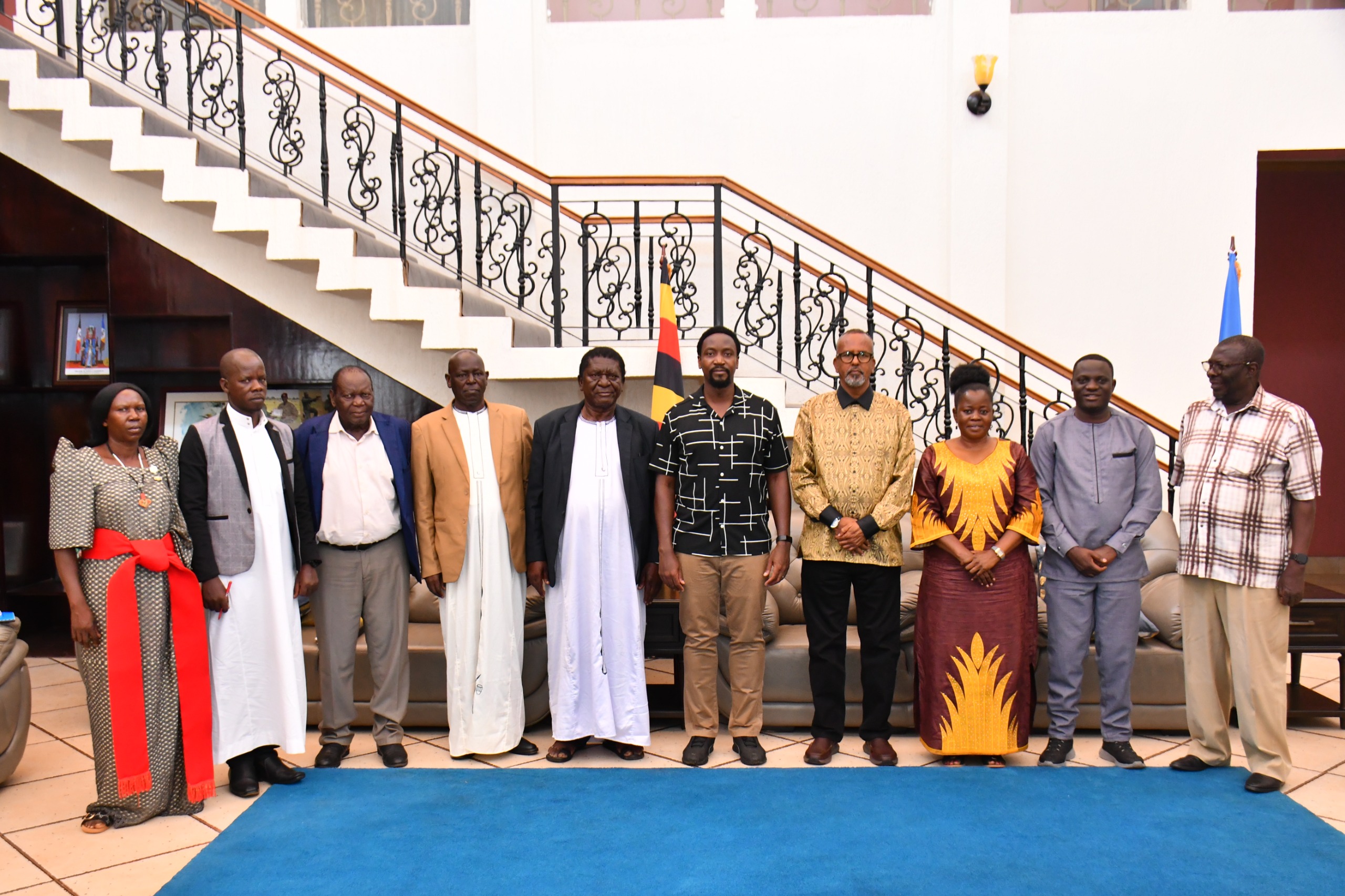
The call by the royal leadership of Bulamogi Chiefdom for stronger cooperation with Obwakyabazinga bwa Busoga has opened a broader conversation on the role of cultural institutions in driving grassroots development and improving the welfare of communities across Uganda.
The call was made on August 15, 2026, when the Isebantu Kyabazinga of Busoga hosted a delegation from Bulamogi at the royal palace. The delegation, led by Prince Naita Richard, the Isabalangira of Bulamogi Chiefdom, held discussions with the King on matters of mutual interest, cultural unity and development.
The delegation was received by Deputy Katukiro Alhaj Osman Ahmed Noor, who ushered the royals into the palace at 11am.
The delegation included Prince Kagoda Elijah, the LC5 Chairperson of Kaliro District, elder Kadama and Princess Nambi Harriet from the Bulamogi royal clan.
Prince Naita commended the Kyabazinga for programmes that have extended opportunities to ordinary people across Busoga, particularly in education, sports, healthcare and cultural mobilisation.
He cited the Kyabazinga's bursary and scholarship initiatives, the Masaza Cup football tournament, health camps and the Empango programme as interventions that have strengthened community participation and renewed hope among people at the grassroots.
The delegation, however, called for greater attention to Bulamogi, citing persistent development challenges including limited access to quality health services, education needs, inadequate water and sanitation services and household poverty.
The royals said stronger cooperation between Bulamogi and Obwakyabazinga could help mobilise communities, development partners and government programmes towards addressing these challenges.
They also invited the Kyabazinga to visit Bulamogi, saying such a visit would further strengthen the relationship between the royal institution and the people while creating an opportunity to directly engage communities on their development priorities.
CULTURAL INSTITUTIONS AND NATIONAL DEVELOPMENT
The engagement comes at a time when Uganda continues to emphasise grassroots mobilisation, household transformation, job creation, human capital development and improved access to basic social services.
Cultural institutions, while preserving the identity and heritage of communities, can also provide important platforms for mobilising citizens around development priorities.
Through their connection with communities, traditional leaders can complement national and local development efforts by encouraging citizens to embrace education, health, sanitation, productive agriculture, entrepreneurship and other initiatives aimed at improving household incomes.
For Busoga, the challenge is increasingly to translate the region's cultural unity and institutional strength into measurable improvements in livelihoods.
The Kyabazinga's programmes in education, healthcare, sports and cultural mobilisation have increasingly created platforms through which communities can participate in activities beyond traditional cultural functions.
The Bulamogi delegation's appeal therefore places development at the centre of the relationship between the chiefdom and Obwakyabazinga.
FOCUS ON JOB CREATION
Responding to the delegation, the Kyabazinga thanked the leaders for what he described as visionary and inspirational leadership that places the interests of Busoga above individual interests.
The King pledged to give greater attention to development initiatives in Bulamogi, particularly programmes capable of changing community behaviour and catalysing job creation.
The emphasis on employment and behaviour change is significant in a region where expanding opportunities for young people and improving household incomes remain central to long-term development.
The King’s commitment also provides an opportunity for Obwakyabazinga, local governments, private-sector actors, development partners and communities to work together in identifying practical interventions that can transform local economies.
For Bulamogi, the proposed stronger partnership with Obwakyabazinga could therefore become more than a cultural relationship. It could provide a platform for coordinated action on education, health, water and sanitation, agriculture, entrepreneurship and employment.
A NATIONAL DEVELOPMENT CONVERSATION
The Bulamogi engagement demonstrates how Uganda's cultural institutions can participate in the broader national conversation on inclusive and community-driven development.
As the country pursues economic transformation, the success of national programmes will continue to depend on how effectively development reaches households and communities at the grassroots.
The meeting between the Kyabazinga and the Bulamogi delegation therefore carries significance beyond the palace. It highlights the importance of partnerships between cultural leadership, government, local authorities, communities and the private sector in addressing development challenges.
For Busoga, the emerging priority is clear: preserve cultural unity while using the strength of the institution to mobilise people around opportunities that improve livelihoods, create jobs and contribute to Uganda's wider development agenda