

✍️ By: Bakinyumya Douglas Paapa
Senior Political TV Host & Analyst – @BDouglasPaapa
WHEN BUSOGA’S POWERFUL GIANTS BEGIN TO FIGHT, WHO PAYS THE PRICE?
Busoga is witnessing a political confrontation that is rapidly becoming bigger than Busoga University.
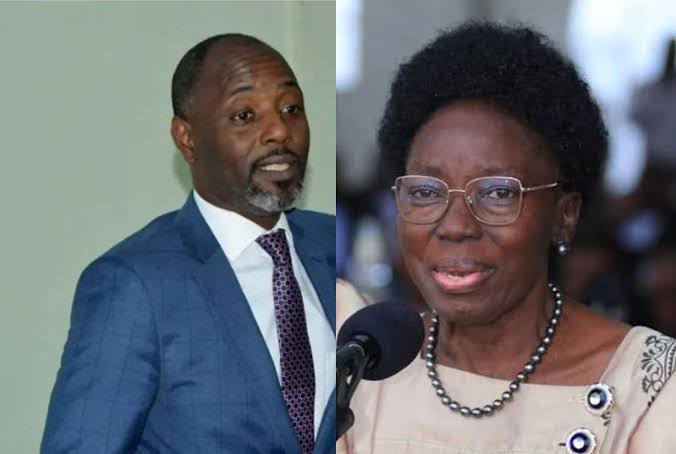
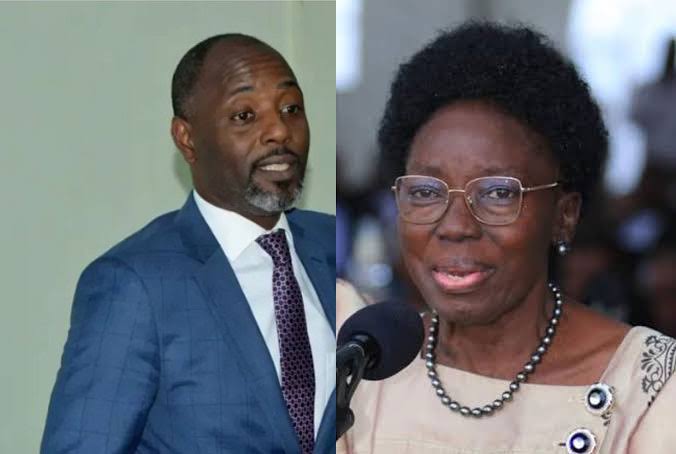
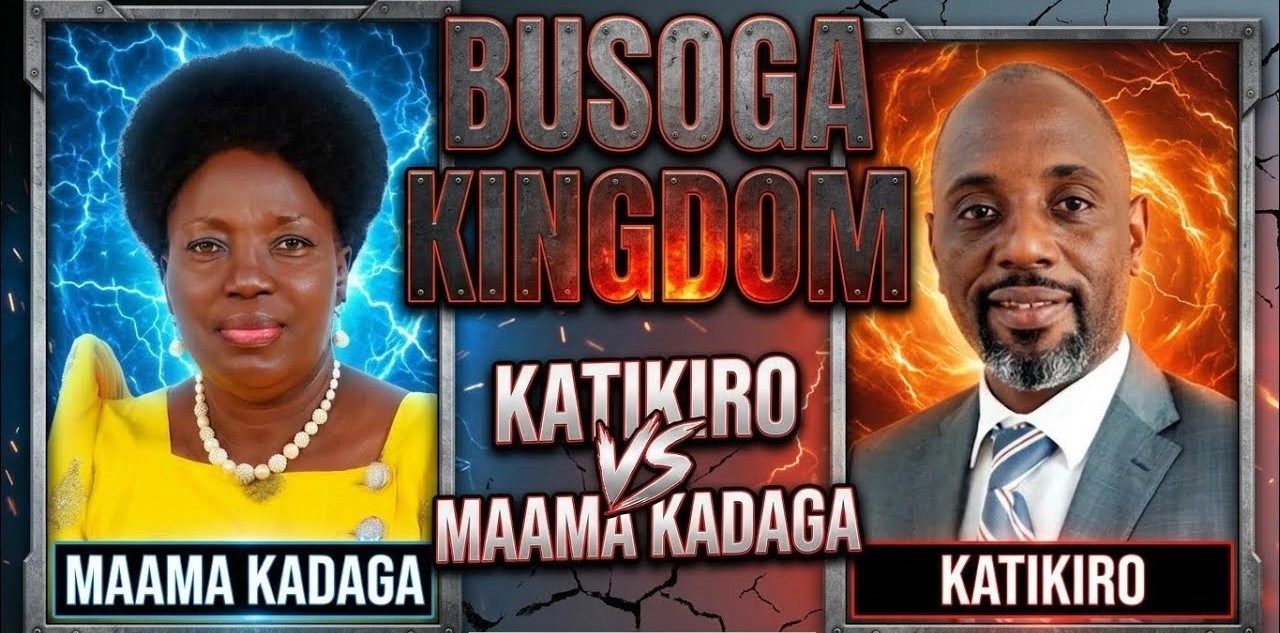
On one side stands First Deputy Prime Minister and former Speaker of Parliament Rebecca Alitwala Kadaga. On the other is Busoga Kingdom Katukkiro Dr. Joseph Muvawala, who also heads the National Planning Authority.
Both are powerful figures, Both command influence, Both claim to speak in the interests of Busoga. But the question now confronting the region is brutally simple:
Are Busoga’s political giants fighting for Busoga or fighting over who gets to define Busoga?
The latest confrontation erupted over the government’s renovation of Busoga University.
Dr. Joseph Muvawala had criticized the quality and ambition of the renovated structures, arguing that Busoga should not be expected to celebrate facilities he considers inadequate for a modern university. He has reportedly compared the structures to those of a secondary school and questioned whether the Kingdom should endorse their commissioning.
Kadaga, however, has pushed back, defending the government’s intervention and challenging Muvawala over what she sees as an attempt to undermine progress.
Her response has been particularly provocative, extending beyond the university itself into questions about Muvawala’s leadership and performance at the National Planning Authority.
And that is where this stop being an argument about buildings.
It becomes a battle over authority, credibility and political influence.
Who speaks for Busoga?
Who determines what Busoga should accept?
Who has the legitimate right to say that something is not good enough?
And perhaps the most uncomfortable question:
Can Busoga afford a war between its own giants when the region is still struggling to regain its economic and educational glory?
THE UNIVERSITY IS THE BATTLEGROUND - BUT POWER IS THE REAL ISSUE
Let us not pretend that this confrontation is simply about walls, classrooms and renovated buildings.
It is about political ownership of the Busoga agenda.
Kadaga represents enormous political experience and national influence.
Muvawala occupies a powerful position within the Kingdom and simultaneously leads a national planning institution.
When two such influential figures publicly disagree, their words carry consequences far beyond personal differences.
The danger is that Busoga University could become collateral damage in a wider struggle for regional political supremacy.
That would be tragic. Because the people of Busoga do not wake up every morning asking which leader has won the latest political argument.
They want jobs.
They want quality education.
They want functioning hospitals.
They want better roads.
They want industries.
They want agricultural value addition.
They want opportunities for their children.
They want Jinja's industrial potential revived.
They want a university capable of producing graduates who can compete nationally and internationally.
So, who is right?
Is Muvawala right that Busoga should reject inadequate infrastructure?

Or is Kadaga right that the region should embrace the government's investment and move forward rather than condemn what has already been achieved?
The answer should not be determined by political loyalty.
It should be determined by Evidence, Standards and Busoga's long-term interests.
If the structures meet university standards, let government publish the evidence.
If they do not, let the responsible authorities explain what remains to be done.
If additional investment is required, let Parliament demand it.
If the institution requires a stronger master plan, let one be produced.
But let the argument move away from personalities.
Because Busoga has suffered enough from political personalities becoming bigger than institutions.
THE REAL QUESTION IS NOT WHO WON THE RADIO ARGUMENT.
The real question is: Will Busoga have a university capable of transforming the region?
That is the standard.
Not applause.
Not political insults.
Not factional loyalty.
Not who has the louder microphone.
Results.
BUSOGA CANNOT AFFORD A WAR OF GIANTS
There is something deeply uncomfortable about watching Busoga's most influential voices collide while the region continues to wrestle with development challenges.
For decades, Busoga has possessed enormous potential.
It has land.
It has Lake Victoria.
It has the Nile.
It has agricultural resources.
It has a strategic industrial history.
It has educated professionals.
It has a powerful cultural institution.
It has political representation.
It has a large population of young people.
And yet the region continues to ask the same painful question:
Why has Busoga failed to convert its enormous potential into sustained prosperity?
Could political fragmentation be part of the answer?
Could endless competition for influence be part of the problem?
Could leaders sometimes spend too much energy proving who is more powerful instead of building institutions that outlive them?
These are uncomfortable questions—but they must be asked.
Because Busoga cannot develop if every major regional project becomes a battlefield for political supremacy.
The university should unite the region around a common demand:
Give Busoga a first-class public university.
If the renovated facilities are inadequate, improve them.
If government has invested billions, acknowledge the investment—but demand more where necessary.
If the institution needs laboratories, build them.
If it needs research centres, establish them.
If it needs more academic programmes, develop them.
If it needs modern accommodation, provide it.
If it needs a 20- or 50-year development plan, implement it.
But do not allow Busoga University to become a monument to political rivalry.
KADAGA, MUVAWALA AND THE BUSOGA QUESTION
Kadaga and Muvawala do not have to agree.
In fact, healthy disagreement can strengthen democracy.
But disagreement must produce solutions—not paralysis.
Kadaga should be able to defend government investment without dismissing legitimate questions about quality.
Muvawala should be able to demand higher standards without appearing to reject every government intervention simply because it did not originate within the Kingdom.
Both positions can coexist.
Busoga can appreciate what government has done and still demand more.
That is not ingratitude.
That is development.
And if Muvawala's criticism is wrong, government should prove it with facts.
If Kadaga's defence is justified, let the standards, budgets, architectural plans and institutional requirements speak for themselves.
Buildings do not need political speeches to prove their quality.
They need standards.
THE MOST DANGEROUS OUTCOME
The worst possible outcome is not that Kadaga defeats Muvawala.
And it is not that Muvawala defeats Kadaga.
The worst outcome is that Busoga loses while its leaders celebrate victory.
That would be the ultimate political tragedy.
Because history will not ask who won the radio exchanges.
History will ask:
What did they build?
What did they transform?
How many young Basoga obtained quality education?
How many jobs were created?
How many industries returned to Jinja?
How much poverty was reduced?
How much human capital was developed?
That is the scoreboard that matters.
BUSOGA DOES NOT NEED MORE POLITICAL GIANTS.
It needs giant ideas.
It needs giant investments.
It needs giant institutions.
It needs giant ambition.
And above all, it needs leaders capable of putting Busoga before personal political supremacy.
So let Kadaga challenge Muvawala.
Let Muvawala challenge Kadaga.
Let Parliament scrutinise government.
Let the Kingdom demand accountability.
Let engineers prove the quality of the structures.
Let academics define the standards.
But when the political smoke clears, one question must remain standing:
DID BUSOGA WIN?
Because if the answer is no, then the giants were never fighting for Busoga in the first place.
✍️ By: Bakinyumya Douglas Paapa
Senior Political TV Host & Analyst – @BDouglasPaapa